
EVERETT – A newly released ‘road map’ for the potential annexation of Everett Transit by Community Transit was presented to board members yesterday as an update to the process that would terminate Everett’s endeavors in bus transit.
Community Transit staff reported to board members, during a workshop yesterday, about the planning stages for the potential consolidation of Snohomish County’s two largest transit agencies which would need to be approved by the CT board and the Everett City Council.
A recent change in state law by the Washington Legislature removed a public vote requirement for consolidation of a Public Transportation Benefit Area (PTBA) and switched any such merger to a vote of that jurisdiction’s elected council, which in Everett’s case is the 7-member city council.
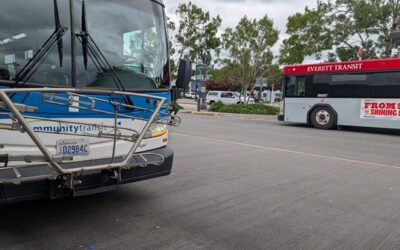
The Community Transit workshop presentation centered on the areas of people, finances and service. CEO Ric Ilgenfritz lead off the workshop saying, “Our goals for (the presentation) today are to update the board on the progress we’re making in our negotiations with the City of Everett team. We want to lay the groundwork for possible consideration and action on an agreement later this year and walk you through that time table and each of the steps that we may be following. Much of that is proscribed in state law. And we also want to preview the planning approach we’re talking about.”
Community Transit consultant, Kimberly Farley, opened the report to board members saying, “The road map for the consolidation effort, the work actually began several months ago, with information gathering and issue identification. So, before the negotiations could really move forward, both organizations really needed to create a shared understanding of the operational, financial, labor, and service issues that would have to be addressed.”
Farley proceeded, “There are three primary buckets this really fits into. We really were able to see this in the people, financial, and service. So, the first pillar, is people, and this really includes meeting the federal and state requirements supporting workforce transition, coordinating with labor partners, and ensuring that employees have clear information throughout this whole process. Obviously, the employees are central to the successful transition, so that was why that work was an early priority.” A major part of any annexation attempt will involve existing collective bargaining agreements (CBAs) for union-employees, like ATU.
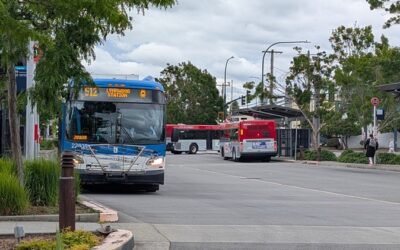
Eunjoo Greenhouse, Chief People & Financial Officer for Community Transit addressed that looming concern for employees, saying, “During the transition, we will need to honor all existing CBAs, and we’re working closely with affected unions. We have already reached out to ATU International and plan to work closely with the ATU leadership throughout this process.”
“The second pillar is financial,” Farley continued. “This work includes identifying the assets involved in the transfer, determining the appropriate valuation methodologies, and coordinating with the state and FTA (Federal Transit Authority), regarding the grant funding assets.”
That financial evaluation revealed an important calculation on the price-tag of any potential annexation of Everett Transit by Community Transit. Greenhouse reported, “Community Transit will be compensating City of Everett for the assets that are being transferred for the asset evaluation. We have taken two different approaches based on the types of assets for land, real property. The value is based on the local share of acquisition cost. If you pay for a piece of land for $10 million when you purchased it, we take any (federal or state) grant funds–say you had $8 million funded by credits (grants)–we take those out, so $2 million will be the local share.” That property value deduction, based on previously received grants by Everett Transit, will reduce how much compensation the city of Everett receives from Community Transit if the annexation is approved.
Farley concluded the trifecta saying, “Service is really the third pillar here, and the objective is twofold. First, we want to make sure that we maintain the continuity of (bus and passenger) service on day one, so that customers really experience a seamless transition. And second, to establish a thoughtful planning process that really allows for future improvements in mobility, regional connections, and customer experience. So, together these three pillars, they provide the organizational framework for the consolidation effort.”
The CT and ET merger idea dates back to 2022-23 when the transit agencies collaborated on the More Transit Together analysis. Now that state law has changed the PTBA merger with a council vote instead of a public vote for the jurisdiction in question, the consolidation would, if approved by the Everett City Council, bring the city into Community Transit’s taxing district and add a 0.6% sales tax to Everett’s current sales tax of 9.9%, which would give Everett a 10.5% sales tax–on par with Seattle at 10.55%.
Ilgenfritz, who along with Everett Mayor Cassie Franklin, re-launched annexation plans three months ago in April, advised yesterday’s board member workshop, “The city has its reasons for considering this. Chief among them, and I think top of mind for us, is an opportunity really to do something significant within the County for the people who live here. We’re two separate and successful transit agencies operating side by side for many, many years and at different scales. The value proposition we’re contemplating is to join forces and really elevate the transit network—not just within the city of Everett but County wide. There are many, many trips that could be served by transit that aren’t being served today based on some of the structural inefficiencies within some of those networks.
“There really is an opportunity to do something significant to elevate quality of life and mobility county-wide…to try and make that possibility a reality, should this agreement go forward.”
During the workshop presentation, Community Transit staff indicated that a “public listening session” is planned for sometime in August but specific date, time and location was not provided but mentioned, “We believe that that date’s going to be announced soon and that session is going to give the community an opportunity to share ideas, concerns about the proposed consolidation. It’s also going to give an opportunity for the agencies to talk about the benefits of the consolidation. The opportunities that they believe that it creates for the Everett riders, as well as how a unified system could really strengthen the transit throughout this entire region. So, we’re looking forward to receiving that public feedback, and we’ll use that to inform the work that we’re doing moving forward.”
To watch the CT board meeting workshop in its entirety, click here.