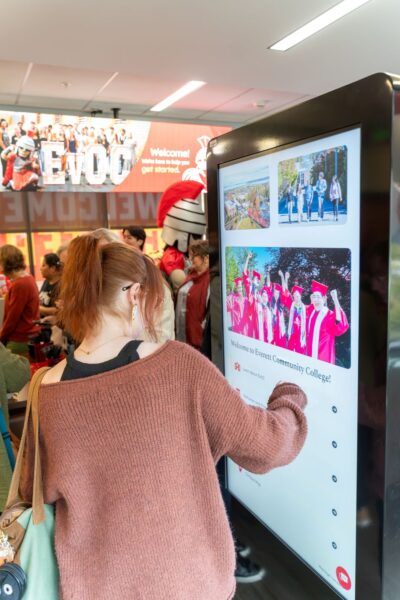
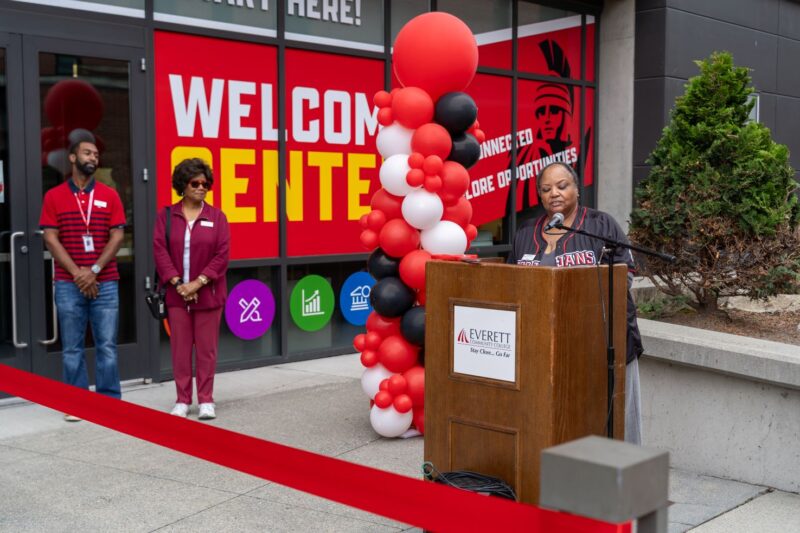
EVERETT: Two out of every five college students in Washington experiences food insecurity, a 2023 survey by the Washington Student Achievement Council reports. Of the 11,000+ students surveyed in Basic Needs Security Among Washington College Students, about a third experience housing insecurity. Everett Community College (EvCC) is making strides to alleviate those burdens with the debut of its Trojan Care Center and Welcome Center. The college hosted a jubilant grand opening ceremony Tuesday to invite community members and students to explore both facilities.
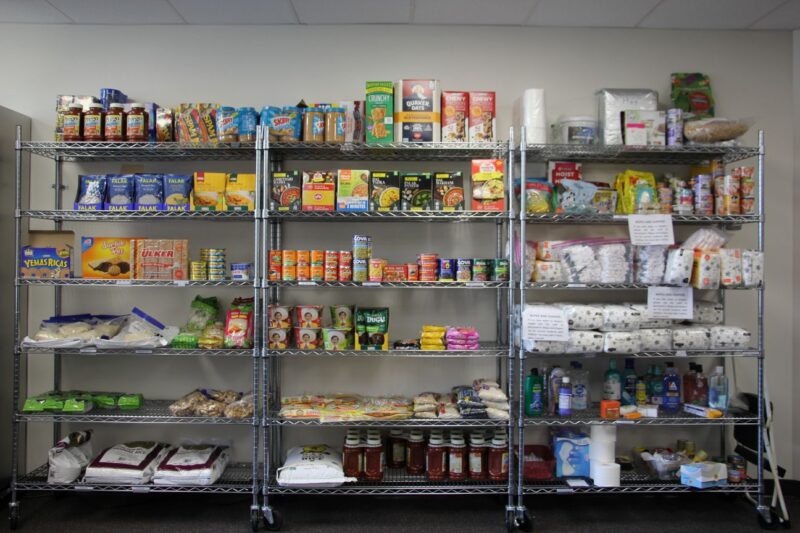
Trojan Care Center is a volunteer and staff-run resource hub. It contains a welcoming face, a food pantry, school supplies assistance and access to resources such as financial, legal, childcare or housing assistance. In addition to fresh and shelf-stable foods, the food pantry stocks pet foods, essential hygiene products and diapers. EvCC’s first food pantry was opened in 2017 by students who saw the need among their peers. Its move to the center of the campus tripled traffic. Over 300 students accessed the food pantry in recent months. When counting family members and dependents, the pantry has fed over 500 people in need, says Trojan Care Center Manager and retired school principal Edward “Ed” Roos.
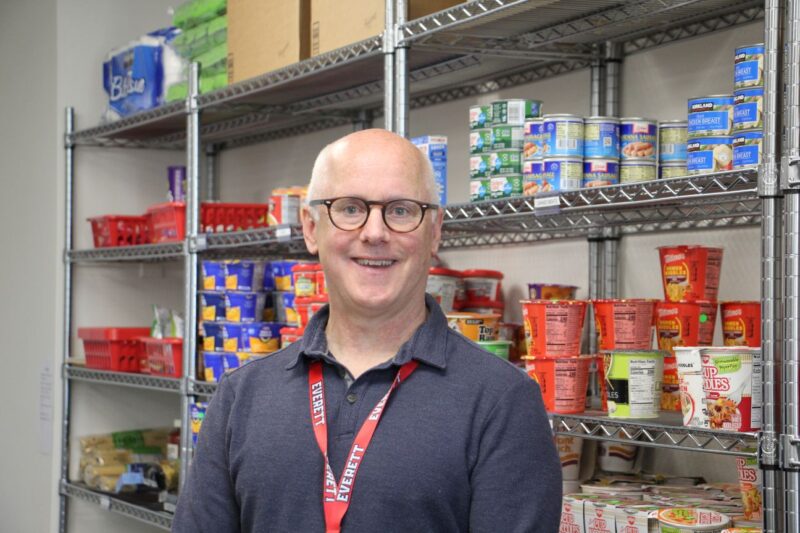
Roos says the Trojan Care Center receives assistance from local nonprofits, private donors and individual contributors. Students with a green thumb pitch in too; fresh produce from the campus garden is a prized resource. Dozens of pounds were gone less than a day after harvest, Roos says.

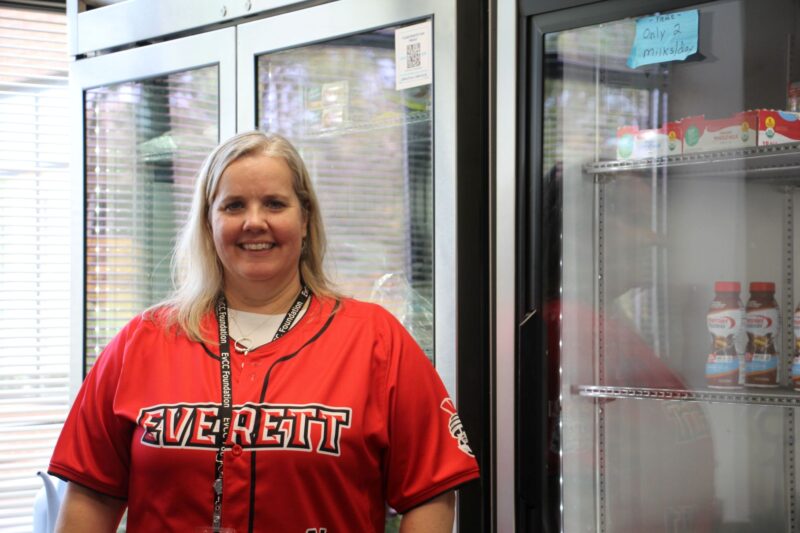
Recent donations have allowed program leaders to purchase a pair of display freezers, making frozen goods more accessible and visible to students. Other new features include a system that allows students to access the pantry after hours. Students can now request items online, which are then set aside for them in a passcode-protected cubby directly outside of the center.
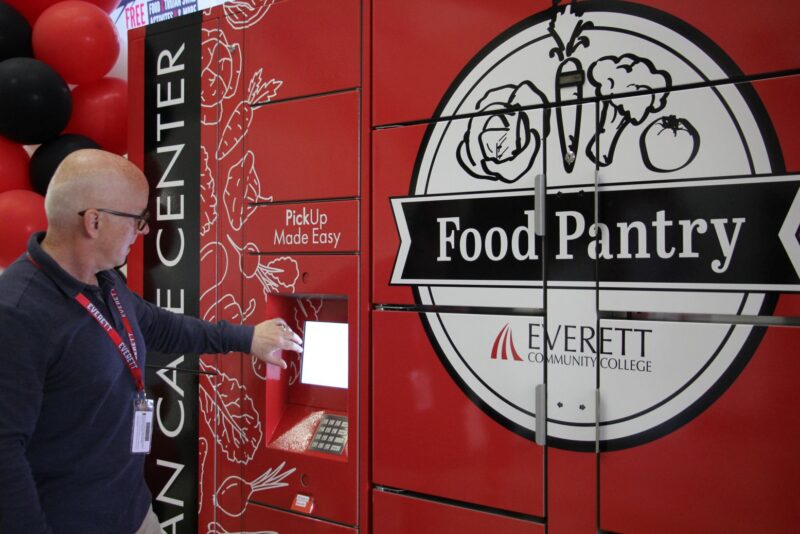
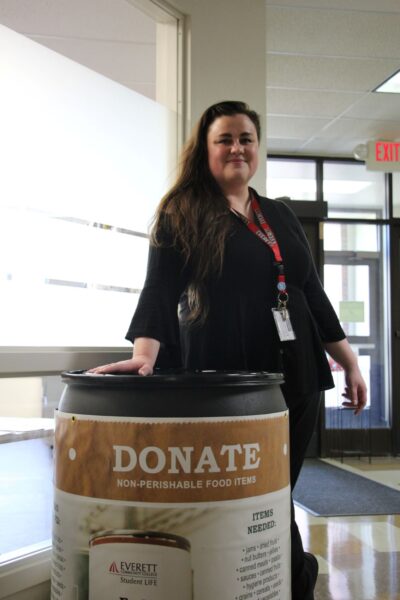
The Trojan Care Center is hosting a campus-wide food drive from Sept. 15-Oct. 5, though Roos says donations of unexpired food and basic goods are appreciated year round.
“We are proud to continue the work of supporting the basic needs of our students, and grateful to our community for their support and encouragement,” Benefits Hub Navigator Jessie Ulmer says. Her position was created in 2023 with the passage of Washington’s Postsecondary Basic Needs Act (Second Substitute House Bill 1559). According to the United Way of King County, students who access benefit hubs are 25% more likely to complete their college education.
Ulmer works with students on a case-by-case basis to connect them with the right resources for their needs. That could include introducing them to emergency grant programs, providing a helping hand when filling out aid applications or connecting them to healthcare resources. She made special note of the EvCC Eats program, which equips over 250 students with gift cards to eat on-campus meals.
“One of the unexpected benefits of the EATS program is how it makes me feel normal, as in I’m going out to eat good food I like, at a place I like to go, sometimes with classmates – just like *normal* people. It’s a very encouraging feeling,” wrote one student in a survey about their experience with the program.
Ulmer says the vision for the Trojan Care Center and the goal of assistance programs was to create “a student-centered experience”. The same vision led the creation of the Welcome Center, a sister hub for education planning and guidance.
The Welcome Center contains a computer lab and interactive displays for career and college exploration. Students can access tuition assistance programs, complete new student orientation, apply for admission or get some guidance from outreach staff on where exactly they should start.
“We want to give our students a red-carpet experience, welcoming them into a supportive environment that simplifies their EvCC journey from day one. The Welcome Center is staffed by our Outreach and Recruitment staff, who work to ensure that every new student feels valued, guided, and fully equipped to achieve their educational goals,” said Vice President of Strategic Enrollment Management and Student Success Brandon Dyer.