
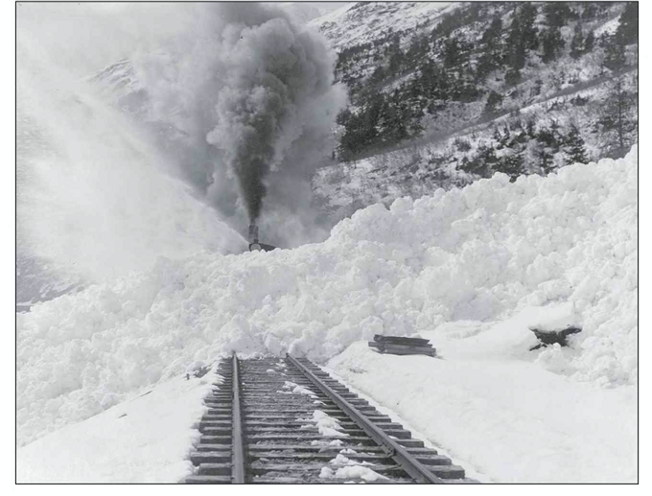
NORTH SOUND, FEB. 27: March 1 marks the date of the deadliest avalanche in U.S. history, the Wellington avalanche near Stevens Pass 116 years ago. In the wake of the recent avalanche tragedy near Lake Tahoe, this is a story to remind us of what avalanches have done in this region.
What happened
In the final days of February 1910, a lot of snow was dumped on the Cascade Mountains. On one day alone, 11 feet of snow fell. Then the weather got warmer, turning to rain, adding more weight to the deep snow on the slopes.
Along the Great Northern Rail Line, snowplows could not keep up with all that heavy snowfall. Two trains, both bound to Seattle from Spokane, were trapped just beyond the west portal of the 2.6-mile Stevens Pass rail tunnel at the then depot town of Wellington.
Early in the morning of March 1, rumbling from a thunderstorm unleased a massive avalanche from the side of Windy Mountain, sending a wall of snow, a half a mile long and a quarter mile wide, down the slopes. The avalanche plowed through the depot and swept the two trains 150 feet down the steep hill into the Tye River valley. 96 people were killed. 23 survived.
Because of adverse weather, some of the deceased could not be recovered until 21 weeks later, in July. Starting in October of 1910, the Great Northern Railway began construction of concrete snow sheds to shelter the tracks just west of the Stevens Pass tunnel.
Since the disaster
The avalanche disaster prompted the construction of a second Cascade tunnel under Stevens Pass. This much longer 7.8-mile tunnel was cut through the mountains at a much lower elevation, just under 2,900 feet. The original tunnel was then abandoned. The old track and snow sheds still remain, and are now part of the Iron Goat Trail, accessible from the Stevens Pass Highway near the town of Scenic.
The Northwest Weather and Avalanche Center
Avalanches carry tremendous power. If planning to venture into the mountains for fun in the snow and nature’s winter wonderland, be fully aware of avalanche conditions before you go.
Visit the NW Weather and Avalanche Center’s website for all the latest mountain and avalanche forecast conditions and heed any avalanche warning information. In addition, be sure to use the buddy system and have all the appropriate avalanche gear, such as an avalanche beacon, snow probe, and snow shovel, when heading out into the backcountry.
The Pacific Northwest is fortunate to have one of the best avalanche forecast centers in the nation, located in Seattle. The Northwest Avalanche Center (NWAC) is celebrating its 50th anniversary this winter season.
The NW Avalanche Center serves the region with science-based avalanche forecasts, focusing on public safety, including community-driven education programs. The center began with a few snow passionate scientists working out of the University of Washington, and it has since evolved and grown into a nationally distinguished avalanche center.
For the complete story of how the avalanche center was born, its evolution to today, and plans for the future, visit the center’s historical story.
