
Everett Transit employees stated their opposition to a proposed merger of Everett Transit and Community Transit during the public comment portion of the Everett City Council’s Aug. 5 meeting. They were not alone—three commenters spoke in favor of the merger.
Everett Transit is the city’s locally-owned transit agency, offering 10 fixed routes spanning across the city and paratransit services that offers door-to-door transport for Everett seniors aged 65 and older or residents with a qualifying disability under the Americans with Disabilities Act (ADA). Fixed route ridership has grown consistently since 2023, jumping by 32% in 2025. Everett Transit maintains a fleet of 48 full-service buses and 25 paratransit vehicles with the support of over 160 employees.
Talks of consolidation with Community Transit began in 2020, when the city conducted a study of current transit options and compared it with polling data about public interest and need for public transport. Study leaders came up with three options for consideration: maintain the current level of service, expand using a tax levy or expand by merger. By 2024, a Washington state grant funded collaborative study was jointly conducted by Community Transit, Everett Transit and the City of Everett. The study’s results suggested that Everett Transit consolidates within Community Transit to provide more frequent and comprehensive service.
The 2024 study, entitled More Transit Together, provided a mockup of what a consolidated system could look like. The example included showed a 50% increase in total bus routes (from 10 to 15), increased frequency for existing and new routes, more night options and improved connectivity to other surrounding communities that would reduce the number of transfers a rider would be required to make. The example also included adding two microtransit service zones, bringing the single-passenger Zip service to Everett to fill gaps in service and connect transfers.
Costs and Potential Costs
To provide full routing and transportation services to the City of Everett, the city would be annexed into Community Transit’s Transportation Benefit Area using an Interlocal Agreement (ILA), which would raise the portion of Everett’s sales tax used for public transit. Everett’s sales tax is currently set at 9.9%. The portion that funds Everett Transit is 0.6%. The transit portion would double, raising the overall sales tax rate to 10.5%.
Those proposing the merger noted that this would bring Everett in line with neighboring cities such as Lynnwood (10.7%) and Edmonds (10.7%). Opponents objected to the nature of the sales tax increase; Raises of this size generally require a public vote but the ILA circumvents the requirement, meaning that the council would not be required to place an item on the ballot– though they are required to hold a public hearing.
Fares
Everett Transit’s fare is $2, while Community Transit’s fare is $2.50. Planners stated that riders and workers would continue to operate as usual for a year after the merger began, but fare unification is undecided past this point. Community Transit’s fare is standardized across its jurisdictions and changes to it require a vote by the agency’s board of directors.
Leadership
Community Transit’s board of directors is composed of nine elected officials representing their respective municipalities and one nonvoting labor representative. This includes two Snohomish County representatives and seven board members representing nearby cities such as Marysville, Mountlake Terrace and Mukilteo. Staff of Everett Mayor Cassie Franklin, who was not present at the Wednesday meeting, said adding an Everett representative to the board was a major factor affecting the mayor’s decision to support the merger.
Labor
Per state law, union workers employed by Everett Transit would be retained and their labor contracts must be honored through their duration. Speakers at Wednesday’s meeting expressed concerns about how other facets of employment, such as wages, seniority or employee protections, would be accounted for.
Public comments
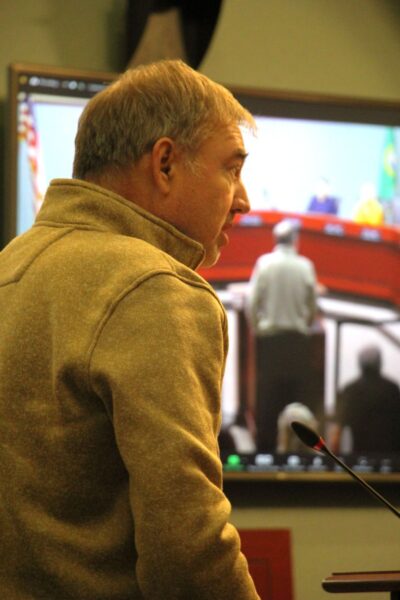
Amalgamated Transit Union (ATU) 0833 President Steve Oss was the first to speak against the merger, advocating for a public vote.
“There are plenty of reasons to say no. You can say no or you can say ‘we’re going to put it up to a vote to the citizens’. That’s what you should do if you’re not sure.” Oss said, adding that he and his constituents had been denied access to merger meetings because the merger did not cost them any jobs. Oss was accompanied by Jan Moisanen, who has served as a bus driver with Everett Transit for over 45 years, and bus driver Keith Jacobson.
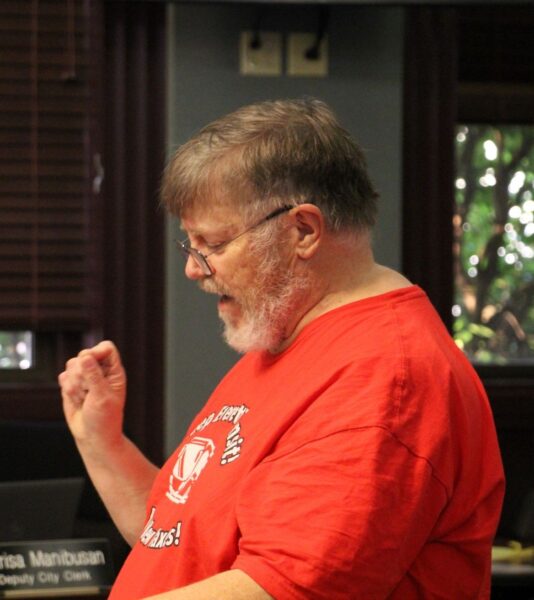
“Whenever transit wanted a sales tax increase, we did it the right way. We went to the citizens and asked. We made our case. They said yes. This time, the city is going out of its way to avoid asking the citizens what they want,” Jacobson said. “The need for more resources, I’ve heard, is that it’s supposed to be a long-range problem. Well, if indeed it is a long-range problem, is it really necessary to permanently get rid of an agency that’s been part of Everett for over 133 years so quickly?”
Casino Road resident Guadalupe Vásquez spoke on behalf of her community to ask Everett Transit and Community Transit to expand services available to her neighbors.
“Most Casino [Road] residents live in low-income apartments with limited parking spaces. This forces many families to depend entirely on public transit for work, school or medical appointments. This dependency has now become a crisis. Since the closure of the Fred Meyer on Evergreen Way, our neighborhood no longer has a major grocery store nearby and that makes us depend totally on public transit just to buy food,” Vasquez added that busses in the area arrived every 30-40 minutes, meaning that transit users needed to wait for prolonged times in dark, high-crime areas to access basic essentials.
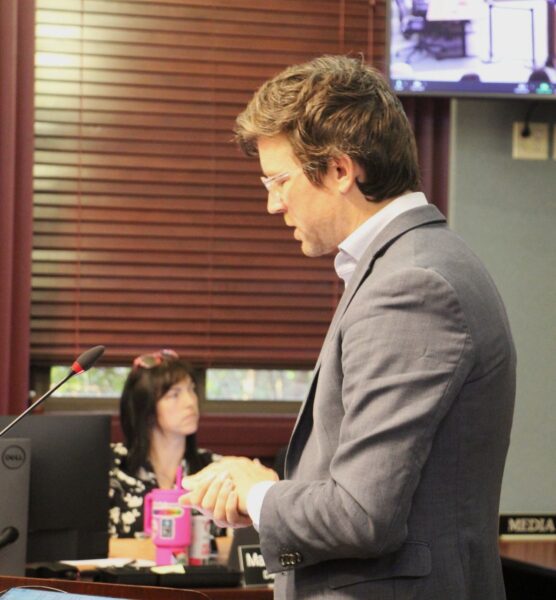
Snohomish County Transportation Coalition Executive Director Brock Howell praised Everett Transit for its commitment to the community, citing quick response to the Fred Meyer’s closure and generally consistent financial stability.
“And yet, before the council is the opportunity to have a genuinely metropolitan level of service, one that Everett Transit—in its current configuration—will be unable to deliver.” Howell detailed the significance of frequency and its direct relationship to higher levels of public transit use.
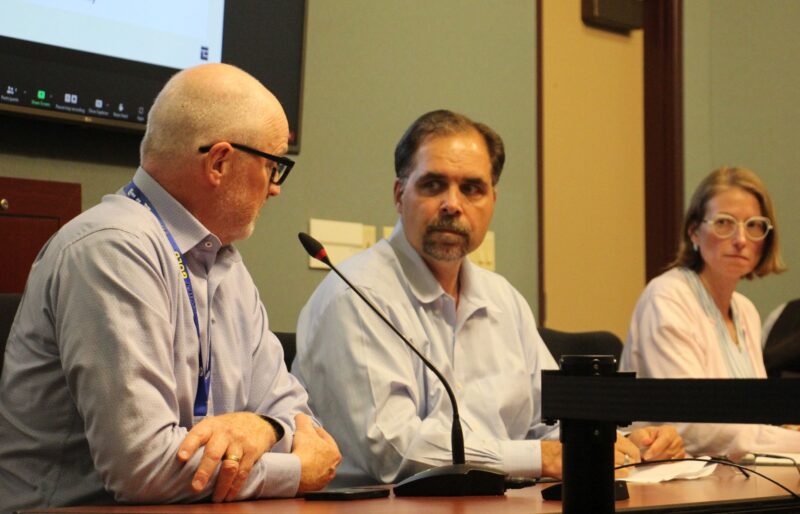
Community Transit CEO Ric Ilgenfritz provided an overview of the merger and the agency’s values before turning to councilmembers for questions.
Councilmember Paula Rhyne asked staff to provide details about how Everett would use the funds from Community Transit’s acquisition. She also noted that the transition was being presented to the council as an “all-or-nothing” type option but that she would like to hear about options for phased implementation or if there was any way to offset the impact of higher sales tax for locals more economically impacted by it.
Councilmember Judy Tuohy asked how paratransit services currently offered to Everett residents would be maintained. Everett Government Affairs Director, Jennifer Gregerson, responded that services currently provided to Everett paratransit riders would be sustained and users would be grandfathered in. Ilgenfritz clarified that Community Transit will continue to abide by ADA requirements for future users.
Councilmember Scott Bader expressed interest in learning how similarly sized cities who previously consolidated with Community Transit felt about their own transitions.
In other business, city staff thanked voters for their supporting the EMS levy renewal during the Aug. 4 election, noting that support for the ballot measure was the highest Everett had ever seen for a levy. According to the Snohomish County Elections as of Aug. 10, the proposition stands supported at about 75% approval.
A recording of the meeting is available on YouTube here. The council will reconvene Aug. 12.