

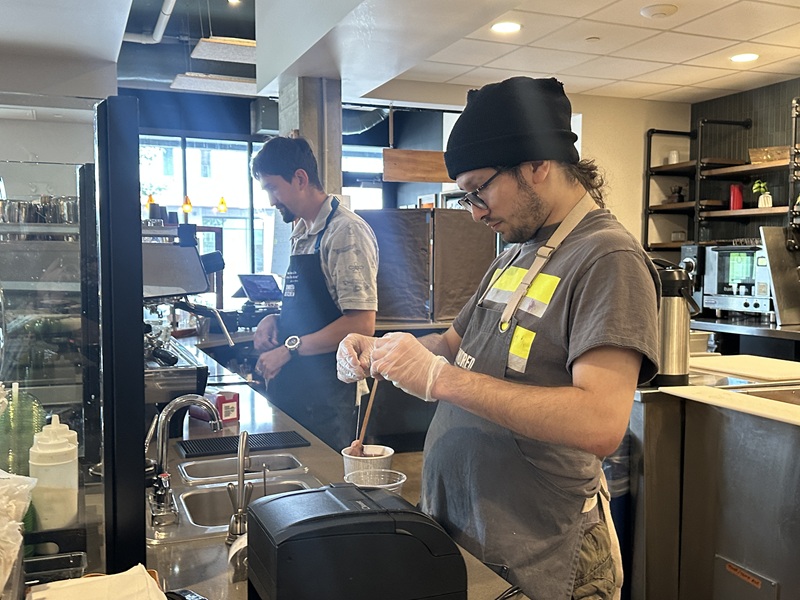
EVERETT, JAN. 20: Kindred Café and RENEW Home and Decor, operated by Housing Hope, will close its doors due to ongoing financial uncertainties.
The two sites were used for on-site job training for individuals experiencing barriers to employment under Housing Hope’s services program, HopeWorks. The café will officially close at the end of January, and the furniture store at the end of March.
Housing Hope is the largest non-profit housing developer in Snohomish County, and offers a continuum of housing and related services, including temporary and permanent housing.
The closures are due to ongoing uncertainty in the affordable housing industry, Housing Hope CEO Kathryn Opina wrote in a letter published on the organization’s website.
“All of the difficult decisions being made at Housing Hope aim to ensure the sustainability of our organization for decades to come,” Opina wrote. “Housing and supportive services are the cornerstone of our mission, and until that cornerstone is solidified once again, we will continue to make adjustments to the lines of business and programs we can operate.”
Kindred Kitchen in a Facebook post, said the decision comes after extensive evaluation by Housing Hope’s Strategic Leadership Team and Board as they work to bring the organization closer to a breakeven budget.
The kitchen will continue to be open for catering operations and its culinary kitchen training pathway.
Joan Penney, Housing Hope director of resource development, said that with the uncertainty at a federal level, rising insurance costs, and delinquency (late payments) from residents, the organization has had to shift priorities.
Mainly, insurance is the biggest issue, with Penney saying property insurance costs increased more than double over recent years.
According to the National Multifamily Housing Council, 30% of policies saw premium increases of 25% or more in recent policy renewals, up from about 17% previously.
“Insurers often cite they are no longer providing insurance for affordable portfolios due to perceived risk or profitability concerns. This reduces competition and makes it harder to find competitive quotes,” Penney wrote.
As for delinquency, residents vary in their reasoning behind not paying rent, but many point to the current economic state.
“Many affordable housing residents rely on hourly, seasonal, or gig-based employment. Cuts to Medicaid, childcare, food benefits, car repairs, and the changing environment of gig work can result in income fluctuations that result in not being able to pay rent,” Penney wrote.
Additional factors include Housing Choice Voucher (HCV) delays, recertification lapses or documentation issues, loss of subsidy due to income changes or missed deadlines.
Cuts and policy changes at the Department of Housing and Urban Development (HUD) have created uncertainty for the largest program to provide funding to address homelessness – Continuum of Care (CoC)
During a roundtable discussion with U.S. Senator Patty Murray (D-WA) in May, Opina said 653 affordable housing units in Snohomish County are supported by CoC funding under Housing Hope.
Homelessness prevention at risk, Trump places controversial conditions on federal grant
HUD has argued that the “Housing First” model has been ineffective in addressing root causes of homelessness and shifts in policy and funding priorities reflect new priorities under the Trump administration.
On Tuesday, the Washington State Department of Commerce announced $54.5 million in grants to help create nearly 5,000 affordable housing units. Housing Hope was awarded one million for its EUCC Project.
