
MOUNT VERNON – If you’ve ever been seduced by the summer alure of picking wild blackberries in Snohomish County, you’ve unintentionally introduced yourself to the Himalayan blackberry, an invasive species that has proliferated across the western coast of North America.
August brings the toasty sunshine that transforms the Himalyan blackberries from tart and red to dark and juicy, giving opportunistic pickers a chance to haul in some free fruit for summer snacking or desserts. Find a blackberry bush right now and the picking is prime.
“Blackberries are genetically diverse, and the species we see growing along roadsides, fields, and unmanaged areas in western Washington are not all the same,” says Washington State University professor, Lisa Wasko DeVetter. “The most familiar species is Himalayan blackberry (Rubus armeniacus), which establishes itself almost everywhere in western Washington,” she says.
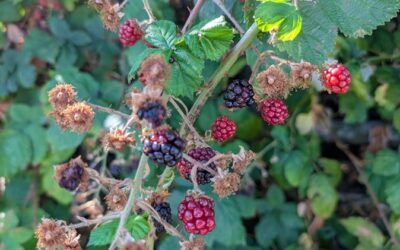
Himalayan blackberry is exceptionally well adapted to the mild, wet climate of western Washington, Wasko DeVetter remarks, “which makes it unique compared to other wild or cultivated blackberry species that do not exhibit the same level of invasiveness.”
This species originated in Eurasia and was introduced by settlers in the mid‑1800s, Wasko DeVetter tells the EverettPost.com, either through the Sandwich Islands (Hawaii) for planting at Fort Vancouver or by immigrants traveling the Oregon Trail. Regardless of the exact route, she says, the species naturalized rapidly and now occurs from California to British Columbia, often to the frustration of gardeners and land managers.
When it comes to the bountiful blackberry, one person’s trash is another person’s treasure, given the swift growing, prickly vines that yield the sweet, dark treasure.
“The ripening season depends on the species and type of blackberry, and the same is true for strawberries, raspberries, and blueberries,” Wasko DeVetter explains. “However, Himalayan blackberry typically begins producing ripe fruit in mid-to-late July and continues through August, with some variation depending on the season and location.”
For most blackberry fans, the appeal is collecting copious amounts of the fruit for free. Everybody’s looking for a bargain these days given the inflation and cost of living impacts we’re navigating. Wasko DeVetter, who leads the Small Fruit Horticulture program and is based at WSU’s Northwestern Washington Research and Extension Center in Mount Vernon, shares these tips for picking blackberries, “If you want to pick blackberries for eating, whether they are from a cultivated planting or growing wild, select fruit that is deep purple to black, indicating it is fully ripe. Ripe blackberries detach fairly easily with a gentle pull and have a deep, uniform black color. Place them carefully into a shallow container, such as a clamshell, to avoid crushing. Avoid berries that still show red or light purple coloration, as these are underripe and will be firm and tart. Also avoid berries that are overly soft, leaking juice, or collapsing when touched, since they may be overripe or infested with fruit flies. When harvesting wild blackberries, it is also a good idea to pick from plants away from busy roads, or low hanging and to rinse the fruit before eating.”
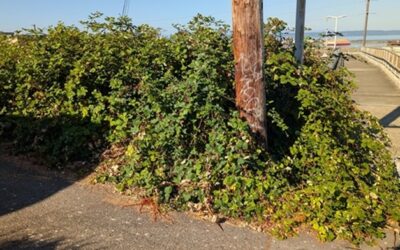
There are three important safety reminders if you want to pluck those becoming blackberries you see in the August swelter of Snohomish County. First, avoid busy roadsides with high-speed traffic. Don’t risk a basket or two of berries for being hit by a car or truck while you’re traversing the edge of a blackberry bush on foot amid drivers zipping by you.
Second, avoid private property. Know your surroundings and don’t trespass to reach those beguiling berries. Third, is to avoid the sticker bushes. In a Murphy’s Law corollary to blackberry picking, there’s always a cluster of beautiful berries just beyond your reach and simultaneously well-guarded by a thicket of thorny vines. The temptation is to wiggle your way into that prickly patch to grasp those elusive treats. If you can bring a leaf rake and use it to shove those protective vines out of the way, that can spare your arms and legs from getting punctured by pointy vines. Side bar to the leaf rake: dress accordingly to protect your arms and legs in concert with your determination for how far to go into the thicket to extract your prize.
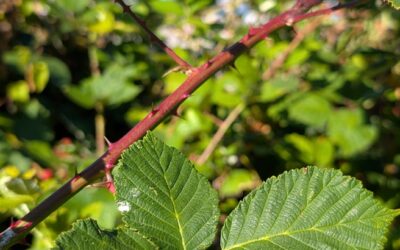
On the other side of the blackberry coin, is the frustration for people constantly battling their growth, fighting the sticker bushes from over-running their yard and landscaping.
Brooke Edmunds, horticulturist with the Oregon State University Extension Service says, Himalayan blackberry has become one of the Pacific Northwest’s most invasive weeds. A single plant can grow into a six-square-yard thicket in less than two years, crowding out native vegetation and desirable landscape plants.
Blackberries enjoy biological advantages that bolster their growth, Edmunds says. “Blackberries keep popping up because of their tremendous and effective dispersal potential. Blackberry canes can produce hundreds of berries, each full of seeds. Birds and animals feed on the berries and spread the seeds over long distances. Even banana slugs help by eating the berries and dispersing the seeds,” Edmunds details.
But there are strategies she recommends if you want to delete, or even just dent, the tsunami of blackberry bushes facing you. “With persistence and good timing, even large blackberry patches can be brought under control,” Edmunds begins. “Physical removal is the most effective long-term strategy,” she says. “Dig up canes or plow under thickets to remove existing plants — but be aware that this also creates an ideal seedbed for new seedlings. Replanting the area with hardy perennials, such as grasses, can help outcompete emerging blackberry shoots and prevent regrowth.”
Edmunds continues, “If digging isn’t possible, consider mechanical mowing or grazing with goats. Both methods weaken plants by repeatedly removing leaves, which starves the roots by cutting off the plant’s food supply. However, both require repeated effort and can damage surrounding vegetation.”
“Goats tend to graze only around the edges of a patch,” Edmunds said. “People sometimes mow paths, lay boards or flatten canes so goats can reach the center of the thicket.”