
EVERETT — Snohomish County estimates 18 fires have ignited this year at garbage collection facilities or inside garbage trucks from rechargeable batteries that were thrown in the trash instead of properly recycled.
The potential fire danger for damaged or punctured Lithium-ion and other high-density rechargeable batteries underscores the importance to properly recycle the potent powerpacks that have become so prevalent in operating our smart phones, laptops and other devices.
Jon Greninger, Snohomish County Solid Waste Operations Manager, tells the EverettPost.com, “We have a one to two fires each month at our facilities. I think we’ve had 18 fires at our facilities this year. It happens frequently.”
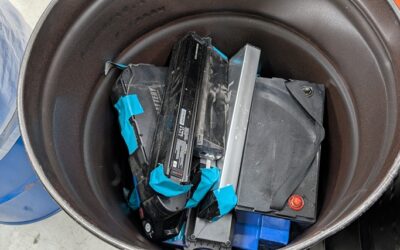
As Li Ion batteries proliferated in devices over the years, recycling programs were started to prevent calamity because of the chain reaction known as “thermal runaway”.
“If batteries go into the regular garbage,” Greninger warns, “battery fires are the leading causes of fires at our facilities or in the curbside collection trucks.”
For all the useful power Li ion batteries pack into a tiny space, there’s an undeniable drawback if the battery case is compromised: they’re vulnerable to thermal runaway because they contain flammable liquid chemicals. When a flaw or damage causes the battery’s internal heat to rise faster than it can escape, it triggers a fast, unstoppable self-heating chain reaction.
Both Waste Management and Republic Services have previously reported fires in their collection vehicles associated with improperly disposed batteries, Greninger reports. Improper battery disposal creates fire hazards at every stage of the waste‑handling process.
Greninger says the fire threat is compounded by the trash collection process which brings an unintended ignition source into contact with a vast supply of fuel to burn. “When a fire happens at a transfer station,” the hazardous waste manager begins, “you’ve got all this fuel around it. And depending on where it happens, if it’s in a (truck) container, what if it’s the front portion of a container that you can’t…(access), that you already have 30 tons of garbage crammed in on? So, you got all this compacted fuel. You can’t get into it (to suppress the fire).”
And that complicates the fire response. All you can do, says Greninger, is “Let the fire department take over.” That usually means, “cut holes into the containers. Flood it with water. And hope it extinguishes,” he says.
The fire threat creates a wider safety problem inside the transfer stations. “We have a lot of heavy equipment at our facilities. A lot of compactors,” Greninger lists, “Or it can be put into the compactor chute, and when we have the big blades compact it, it can grind and spark.”
“It can happen on the tipping floor, if one of the loaders drives over with their bucket and hits a battery, and it ignites,” he describes of the spot inside the transfer station where collection trucks unload or “tip” their containers to empty them.
Most tipping‑floor fires are contained and extinguished quickly, according to Greninger, which minimizes damage. Recent incidents have primarily involved containers of compacted garbage. A new container costs approximately $40,000, but in many cases, damaged containers can be repaired and returned to service.
Depending on the fire’s size, it can interrupt operations for a few minutes or a few hours. “Any fire response requires shutting down affected areas of the facility to ensure safety, preserve equipment, and allow fire crews to work,” Greninger says. “Even when damage is limited, these interruptions can affect workflow and throughput. Proper disposal of batteries is essential to reducing these risks, protecting facility infrastructure, and ensuring the safety of workers and the public throughout the waste‑handling process.”
Greninger praises the swift response times from area fire departments when a battery fire combusts, saying, “their response times are consistently quick. The duration of an incident varies widely depending on the severity and location of the fire. Some small tipping‑floor fires can be extinguished by Solid Waste staff without interrupting customer service. When fire crews are needed, they may resolve the situation in under an hour, or it can take several hours if the fire is more complex.”
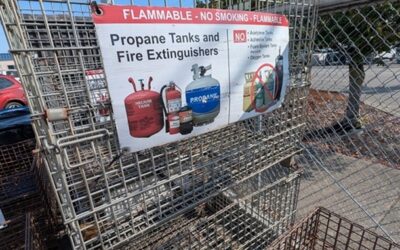
Another culprit along with the Li Ion and rechargeable batteries are small propane canisters that Greninger adds to the danger list, “Propane canisters, the little greeny small ones. A lot of people will throw those away,” in the garbage bin. “Don’t throw any of those away,” Greninger implores. “Bring them here to the Haz Waste facility.”
A few minutes to properly recycle these items can save firefighters, sanitation workers and the general public valuable time. Imagine your home or business catching fire but firefighters are already on the scene of a rechargeable battery fire, delaying their arrival time to fight the fire you reported.
Snohomish County Hazardous Waste urges people to start by looking for warning signs associated with Li Ion and rechargeable batteries. For starters, is the battery swelling or bulging? Does it have visible cracks or leaks? Is the battery releasing smoke or vapor? Does it over heat or emit a burning smell?
If so, stop using the device immediately. Move the battery to a safe area if it’s safe to do so. Place it in a non-flammable material such as sand or kitty litter.
Never put a damaged or discarded battery in the trash or conventional recycling bin.
Next, take the battery to a household hazard waste facility or purchase a DDR (damaged, deformed or recalled) kit from a supplier like batterynewtork.org.
Of course, if the battery catches fire or ignites, evacuate the area and call 911 immediately.
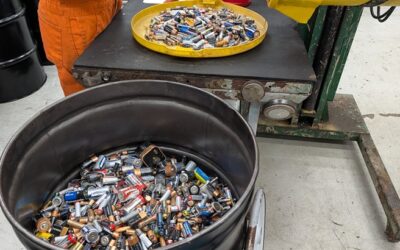
The following batteries need to be properly recycled: Lithium Ion, Nickel-Metal Hydride, Nickel Cadmium, Small Sealed Lead Acid and primary or single-use non-rechargeable alkaline batteries (AAA, AA, C, D, 9V) can all be taken to household hazardous waste sites for safe handling.
“Proper battery disposal is critical to protecting our facilities, workers, and the community,” Greninger emphasizes. “Every solid waste facility in our system offers free battery recycling in designated recycling areas, making safe disposal easy and accessible.”
Here are the locations you can visit to properly recycle rechargeable batteries in Snohomish County.
- Airport Road Recycling and Transfer Station, 10700 Minuteman Dr., Everett WA 98204. Open Mon.-Sun. 7 a.m. – 4:30 p.m.
- North County Recycling and Transfer Station, 19600 63rd Avenue NE, Arlington WA 98223. Open Mon.-Sun. 7 a.m. – 4:30 p.m.
- Southwest Recycling and Transfer Station, 21311 61st Pl. West, Mountlake Terrace WA 98043. Open Mon.-Sun. 7 a.m. – 4:30 p.m.
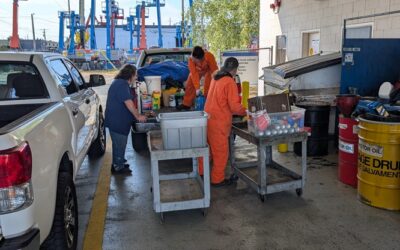
- Household Hazardous Waste Drop-off Station, 3434 McDougall Avenue, Everett WA 98201. Open for household customers Wed.-Sat. 8 a.m. – 4 p.m., open for business customers by appointment only Wed.-Fri. 8 a.m. – 3 p.m.
There are also three drop boxes for battery recycling in outlying Snohomish County.
- Dubuque Road (Lake Roesiger) Drop Box, 19619 Dubuque Road, Snohomish WA 98290. Open Fri. – Tues. 7 a.m. – 4:30 p.m.
- Granite Falls Drop Box, 7526 Menzel Lake Road, Granite Falls WA 98252. Open Sat., Sun., Thurs. 7 a.m. – 4:30 p.m.
- Sultan Drop Box, 33014 Cascade View Dr., Sultan WA 98294. Open Wed.-Sun. 7 a.m. – 4:30 p.m.