

EVERETT, APRIL 7: The Everett Police Department is looking to implement a Drones as a First Responder (DFR) program, which could reduce response times and assess active scenarios. The program could begin as early as summer.
Last week police officials hosted a community meeting to introduce the technology and to answer any questions.
Ultimately, the DFR program will provide real time imagery before officers arrive on a scene, allowing them to respond to situations faster, and utilize resources more effectively.
The drone technology is owned by Flock Safety, which owns a series of crime-reducing technology. Last year, Everett implemented roughly 70 Flock cameras to capture reported license plates and monitor high crime areas before police arrive on the scene.
Everett Police will partner with Flock Safety for a one-year trial period to test the DFR technology. Flock has supplied one drone with a loading dock. To fully take advantage of the trial, EPD purchased a second drone at $50,000, Everett Police Captain Robert Goetz said during the meeting.
One drone will be used in south Everett and the other in the north.
Washington State is facing a police shortage, and EPD hopes the technology will help prioritize and manage resources more effectively. At agencies that use the drone program, 20% of calls that came in were cleared without sending a ground unit, Goetz said.
According to Flock representatives, 15 of their DFR programs are currently deployed. 25 more are expected to be implemented in the next three to four months.
What DFR can do:
- DFR can be sent to assess multiple different scenes such as potential fires, car crashes, stolen vehicles and more
- De-escalate situations. For example, if the operator takes a call reporting a car has driven into the lake, Everett Police can send the drone to assess the scene. From there, police can act accordingly based on the information the drone shows in real time
- Part of this program includes finding missing people
“The idea of doing a program like this helps us expand what we do today,” Chief John DeRousse said.
As of 2024, the typical response time to a serious call in Everett is about four minutes, Goetz said. Agencies that use the drone program have a response time of two minutes or less.
What the DFR program will not do:
- Everett police will not use drones for things unrelated to a call. For example, they will not send the drone out to do “random surveillance”. It can only be activated for assessing calls
- DFR will not be used to monitor protests
- DFR does not have facial recognition software
- DFR will not be used in immigration enforcement
If you have questions, you can email [email protected]. Police officials will also be attending neighborhood meetings in the coming weeks.
If the program proves to be effective after the trial period, it will cost the city roughly $300,000 to implement the program. The department is proactively looking for grants and funding sources, Goetz said.
The department hopes to begin the trial period as early as June. They first need an approval signature from the mayor.
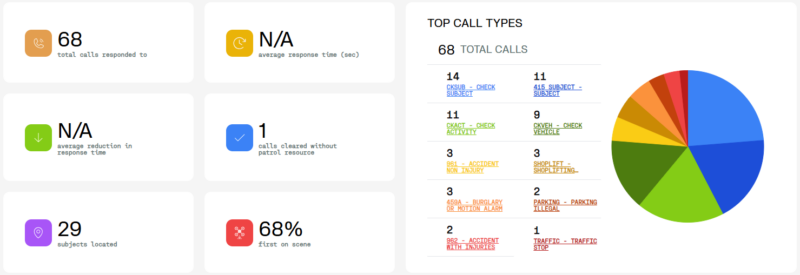
EPD will soon launch a website detailing all the aspects of the project. Community members will also be able to see detailed information on what the drones are being used for through a public dashboard.
