
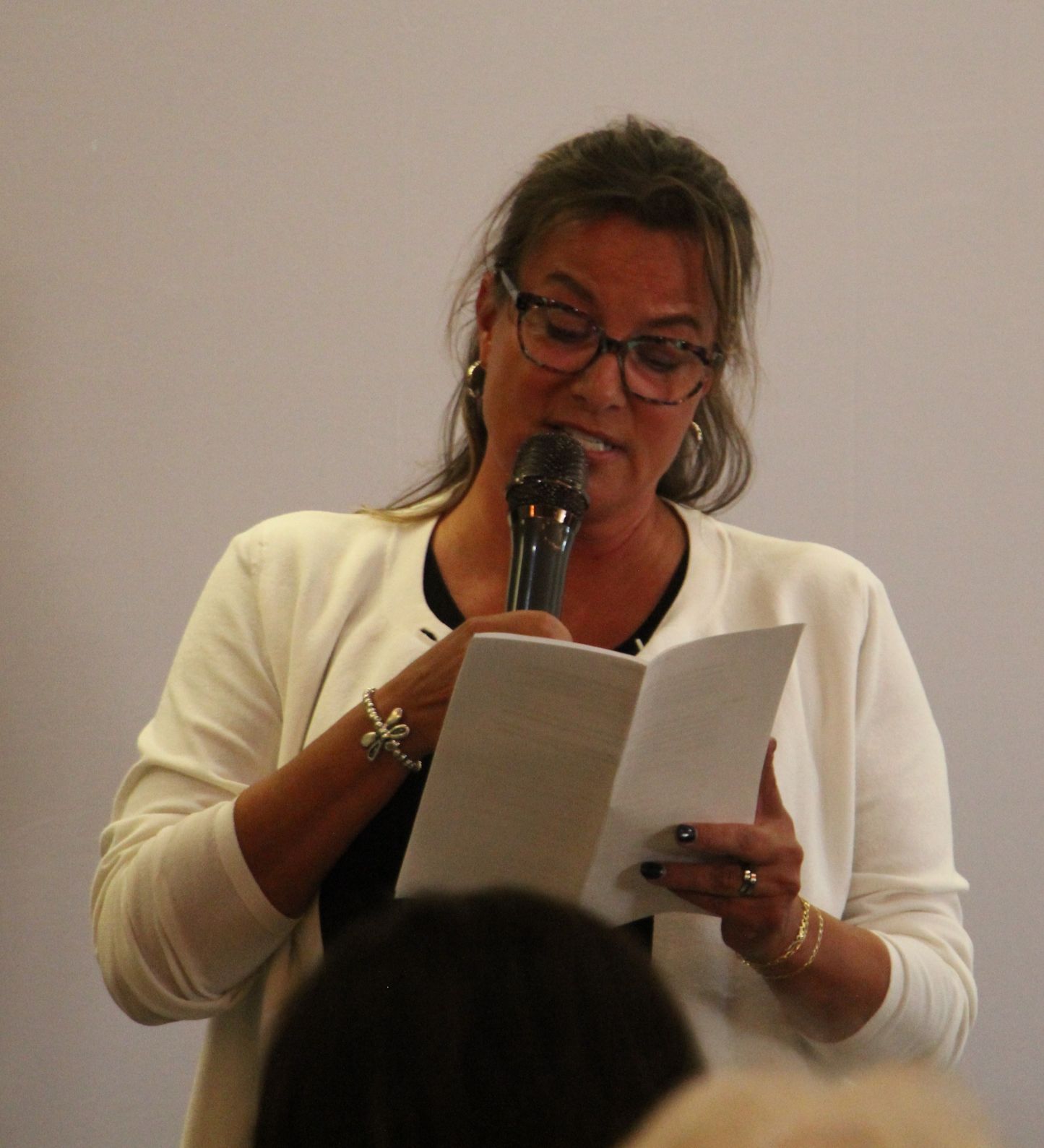
EVERETT — In a 33-minute address, Mayor Cassie Franklin unveiled her plan for the city’s 2026 budget, offering a $766 million spending plan to the City Council for consideration that potentially includes two sales tax increases as she simultaneously cited the need for Everett to remain affordable.
Franklin lead off her comprehensive annual budget proposal optimistically, “As we work to sustain the services our residents rely on, it’s crucial that we’re preparing for tomorrow and our future needs. We are entering an exciting period of growth and opportunity with transformational projects on the horizon, including the outdoor Event Center, potential annexations, and Light Rail to Everett. That’s why my proposed 2027 budget is focused on meeting today’s needs, while also positioning our city for a bright future.”
The detailed budget plan for 2027 most notably contained a proposed 0.1% sales tax increase to spend on courts, police, and public defenders. “Public safety, remains our top priority,” the mayor said. “I’m asking council to consider implementing a public safety sales tax, an increase of one tenth of one percent (0.1%) or one cent on a ten dollar purchase. If approved, this funding would sustain and strengthen key parts of our comprehensive community safety approach.”
That approach, for Franklin, is headlined by the city’s police staffing levels. She said, “Everett’s proud to have one of the highest police staffing rates in the region. This revenue would protect and fund officer positions and support the department’s ability to grow along with our city. Our Care Team would receive dedicated funding, allowing us to sustain their important work long-term. We’d utilize a portion to address rising costs passed down from the County for increased jail service costs and from the state’s unfunded mandate, greatly increasing indigent defense cost,” referencing public defenders for criminal defendants who cannot afford their own attorney.
The city’s Care Team is a division of Everett Police that utilizes social workers as first responders, for instance, to address people in mental health crisis or instability.
Acknowledging the financial burden associated with cost-of-living and sales tax, Franklin added, “I know, bringing forward a tax increase is tough, but it’s the right decision for public safety in Everett.” Emphasizing the unfunded mandates Everett absorbs from Snohomish County for jail services or the State of Washington for other programs, Franklin offered, “Sales tax is the best tool available.”
The Snohomish County Council already passed it’s 0.1% sales tax to fund public safety, courts, prosecutors, law enforcement and public defenders earlier this year at the county level. Everett runs its own municipal court system for non-felony cases, while Snohomish County Superior Court over-sees felony-level crimes. The Washington Legislature approved a law providing an option for local jurisdictions–like a city or a county–to raise their sales tax 0.1% specifically dedicated to public safety related programs like hiring more officers, prosecuting attorneys, courts or public defenders.
That means Everett residents could see a combined 0.5% sales tax in 2027 if Franklin’s public safety tax proposal, in addition with the Snohomish County proposal which has already been approved, and another 0.3% sales tax increase if the Everett City Council approves Community Transit’s proposed annexation of Everett Transit which could occur before the end of the year.
“I know these are not easy decisions,” Franklin stipulated, “but they are the most responsible options available to protect and grow the services the public relies on.”
“This budget supports emergency response, alternative response, as well as our criminal justice system,” Franklin stated about her 2027 budget, elaborating, “We lead the region in police staffing with 220 officers included in my proposed budget. This equals two officers per 1000 residents, well above the statewide average. We recently applied for a grant to fund an additional 10 officers, plus a much needed domestic violence victim advocate position. We’ve also successfully and safely incorporated technology, further strengthening our ability to address crime in our community.”
Because of that public safety spending, Franklin, alerted, “Violent crime and property crime have both dropped and at a much greater rate than the state average. Plus, we’re closing more cases.”
Here are some additional remarks Franklin provided in support of her proposed 2027 budget that will now go to the City Council for their approval.
“I’m proud to bring forward a fiscally responsible budget that protects core services, maintains our reserves, and allows us to make bold investments in Everett’s future. I also want to highlight that we balanced our budget without any additional cuts to services this year.
“Our full City budget totals almost 766 million. A large portion of that is non-general government, which we will cover in more detail in the coming weeks during the budget process. Tonight, I’ll Focus mainly on the general government fund. The portion of our budget people are most familiar with. Our general fund totals just over 204 million.
“These are the dollars that go towards many of the essential services our residents rely on each day. For 2027, the general fund is facing a $13.1 million structural deficit. Thanks to the revenue solutions approved by council this year and strong economic growth, we will be able to close that gap, but the deficit will return.
“This budget challenge isn’t unique to Everett. Most all Washington cities cannot increase their property tax Levy by more than one percent without additional voter approval. Meanwhile, the cost of providing Services increases by far more than one percent.
“We have pursued new revenue, including putting ballot measures before the voters for support. We’ve aggressively grown Everett’s economy and expanded our tax base. That’s why we’ve brought forward a few revenue actions this year. Updating our utility tax to be in line with surrounding cities, putting an EMS Levy on the ballot to support emergency services, and modernizing Everett’s business and occupation tax system. Now, we have additional decisions ahead, including consideration of a public safety, sales tax, and (Everett) Transit consolidation.
“Ultimately, that’s what our budget work is about serving our community. And again. I’m proud to bring forward a budget that advances our efforts in our priority areas that matter to our residents and businesses, most including public safety, housing, and quality of life, economic development, and financial sustainability.”